Independent review. We are not affiliated with the manufacturer of FemiCore. We may earn a commission if you purchase through our affiliate links, at no additional cost to you.
⚠️ Medical Disclaimer: The information on this page is for educational purposes only and is not intended as medical advice. Dietary supplements are not drugs and are not evaluated by the FDA to diagnose, treat, cure, or prevent any disease. Always consult a qualified healthcare provider before starting any new product. Individual results may vary.
Table of Contents
Table of Contents
FemiCore Ingredients: What’s Really Inside This Supplement?
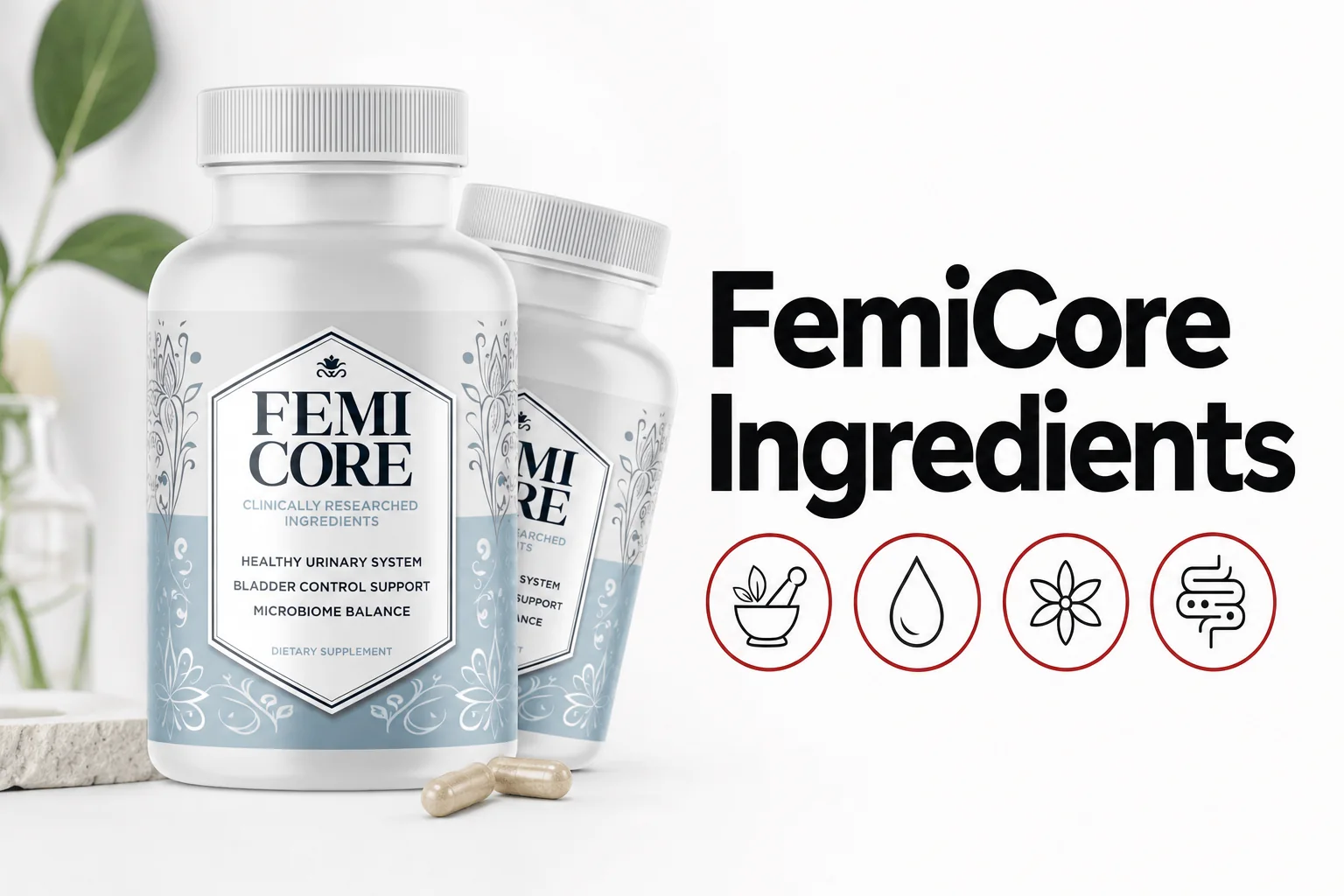
FemiCore ingredients include a proprietary blend of botanicals and probiotics aimed at supporting bladder health and urinary comfort, but the exact dosages and research support vary by ingredient. The formula features extracts like mimosa pudica, cranberry, bearberry, berberine, and five Lactobacillus strains, with potential benefits but also limitations in research and transparency. Here’s a deep dive into what’s in FemiCore, what the science says, and who should be aware of safety or allergen concerns.
What Reviewers Commonly Report
Early improvement – US-based reviewers sometimes notice improved bathroom routine comfort within a few weeks. Some mention fewer leaks, less urgency, or easier sleep interruption, but experiences are inconsistent and the sample size is small. Before deciding on Femicore Ingredients, compare the current price, return terms, and what the seller actually promises.
No severe side effects reported online – Most complaints, where they exist, relate to shipping delays or uncertainty about the formula, not major adverse effects. A useful Femicore Ingredients review separates verifiable details from promotional language.
Mixed Signals and What They Mean
Transparency gaps – Ingredient blend amounts are listed on the bottle, but there’s no breakdown by individual probiotic or botanical—making it hard to compare to research doses. No official clinical studies validate the formula as a whole. Readers assessing Femicore Ingredients should check the product details and the source behind each important claim.
Bottom line: FemiCore ingredients are well-known in women’s supplements, but dose details and lack of published clinical research make it important to set expectations. US adults should check for allergens and consult their provider if they have health concerns or take medication.
FemiCore – Key Facts at a Glance
| Feature | Details |
|---|---|
| Product Name | FemiCore |
| Type | Bladder & Urinary Comfort Supplement |
| Form | Capsules |
| Serving | 1 capsule daily (as per label) |
| Main Herbal Blend | 350 mg (Mimosa pudica seed, Cranberry extract [30% PAC], Bearberry leaf, Berberine) |
| Probiotic Blend | 50 mg (Lactobacillus crispatus, acidophilus, plantarum, gasseri, casei) |
| Best For | Women seeking natural bladder or urinary support |
| Allergens | Not stated by the manufacturer; always check full label |
| Availability | Official website and authorized direct affiliates only |
FemiCore Ingredient Summary: What’s on the Label?
In short, FemiCore contains a 350 mg proprietary blend of botanicals and a 50 mg blend of five probiotics. Here’s what’s in each capsule, according to the official supplement facts: Any conclusion about Femicore Ingredients should reflect the available evidence, not just testimonials or advertising.
- Herbal Blend (350 mg): Mimosa pudica seed, Cranberry extract (30% PAC), Bearberry leaf, Berberine
- Probiotic Blend (50 mg): Lactobacillus crispatus, L. acidophilus, L. plantarum, L. gasseri, L. casei (no CFU count listed)
The FemiCore label does not disclose how much of each individual herb or probiotic strain is present, nor the total colony forming units (CFU) for probiotics. There’s also no list of inactive ingredients or allergens given publicly, so users with food sensitivities should ask the manufacturer directly before use. Check the official listing for current details and refund conditions before buying Femicore Ingredients.
>> Read The Ingredients, Science & Customer Feedback On The Official Website
Bottom line: The FemiCore formula is typical of natural bladder health supplements found in the US, but details like exact dosages and probiotic potency are not fully transparent. Whether Femicore Ingredients is suitable depends on individual needs, the product details, and the evidence available.
Botanical Extracts in FemiCore: What They Are & What Research Shows
In short, the botanicals in FemiCore—mimosa pudica, cranberry, bearberry, and berberine—are widely used in natural bladder and urinary formulas, but the strength of research and potential for side effects varies. Treat claims about Femicore Ingredients cautiously unless they can be confirmed by reliable, independent sources.
Mimosa Pudica (Seed)
Traditional use – Used in traditional remedies as a mild antimicrobial and gut soother, mimosa pudica seed is mostly researched for digestive support, not directly for urinary or bladder issues. There are few high-quality studies in humans. Compare Femicore Ingredients with alternatives using transparent criteria rather than promises alone.
Safety – Generally considered safe in traditional doses. No confirmed drug interactions, but lack of robust US research on high-concentration extracts. Some people may experience digestive upset. When researching Femicore Ingredients, separate independently verifiable information from claims made in advertisements.
Cranberry Extract (30% PACs)
Reason for inclusion – Cranberries contain proanthocyanidins (PACs) believed to reduce bacteria’s ability to adhere to the bladder wall. A 2023 Cochrane review concluded cranberry products may reduce recurrence of urinary discomfort in women, but benefit is typically modest and evidence isn’t formula-specific. A balanced assessment of Femicore Ingredients should include limitations as well as any potential advantages.
Safety/interactions – Generally safe at typical supplement doses. Can sometimes interact with warfarin (a blood thinner), so check with your doctor if you take it. Diabetics should verify sugar levels if using juice blends (not applicable to capsule extract). Readers considering Femicore Ingredients can use these checks to make a more informed comparison.
Bearberry (Leaf)
Traditional use – Bearberry (aka uva ursi) has a long history in herbal urinary support. The active compound, arbutin, is thought to have mild antibacterial effects in the bladder. However, clinical evidence in humans is limited and high doses could stress the liver or kidneys. Before relying on claims about Femicore Ingredients, look for clear product details and trustworthy supporting evidence.
Safety – Short-term use in moderate doses is generally considered low-risk for healthy adults, but long-term use or high doses may cause stomach or liver upset. Not recommended during pregnancy, for children, or for those with kidney/liver disorders. A careful comparison of Femicore Ingredients starts with the seller’s terms, the published details, and independent sources.
Berberine
Why it’s used – Berberine, an alkaloid found in certain plants, shows antimicrobial and anti-inflammatory properties in lab studies, and is sometimes used for blood sugar support. There’s limited evidence for direct urinary benefits, though it may help maintain a healthy microbiome. When reviewing Femicore Ingredients, look for specific information that a reader can independently verify.
Interactions & safety – Berberine can interact with a range of prescription medications (including those for diabetes and blood pressure) and can cause gastrointestinal upset in some people. Avoid if pregnant or breastfeeding unless your doctor approves. The strongest assessment of Femicore Ingredients explains both what is known and what remains uncertain.
Overall: Botanicals in FemiCore are common in natural “bladder health” blends. While most are safe for short-term use, long-term effects, optimal dose, and interactions are not well studied. Always discuss new supplements with your healthcare provider. Anyone comparing Femicore Ingredients should confirm that the product page and seller policies are current.

Probiotics in FemiCore: Strains, Purpose & Evidence
In short, FemiCore’s probiotic blend includes five Lactobacillus strains thought to help maintain a healthy vaginal and urinary microbiome, but absent CFU counts and strain-specific research for this formula limit certainty on effect.
- Lactobacillus crispatus – Dominant naturally in vaginal flora; some research suggests it may help keep out unwanted bacteria.”
- L. acidophilus – Popular in US supplements and studied for digestive and vaginal support with some evidence for promoting healthy balance.
- L. plantarum – May support immune function and is sometimes linked to gut comfort; less direct evidence for bladder health.
- L. gasseri – Associated with both gut and vaginal balance, with limited but emerging research in urinary health.
- L. casei – Used in many yogurts and probiotic supplements, with broad gut health applications; little specific evidence for urinary uses.
Most research on probiotics and bladder/vaginal health involves much higher CFU levels (often in the billions), while FemiCore gives only a 50 mg blend, with no individual strain amounts or overall potency. It’s unclear if this matches effective doses in clinical trials, and probiotic results vary by person and baseline health.
Safety – If you’re immunocompromised or take immunosuppressant drugs, consult your doctor before using probiotics. Most healthy adults tolerate these strains well, though initial mild bloating is possible. No known major food allergens reported for these specific strains, but always check with the brand.
>> See Full Details, Label Information & Refund Terms On The Official Website
Bottom line: The Lactobacillus strains in FemiCore’s probiotic blend are well-established in other products for women’s wellness. Without CFU counts or clinical research on the specific formula, effect is uncertain.
FemiCore Supplement Facts: Dosage, Formula, and Missing Info
In short, FemiCore’s serving size is one capsule daily, as stated on the bottle. Each dose contains 350 mg of the proprietary herbal blend and 50 mg probiotic blend, but does not reveal exact breakdowns by ingredient or CFU per strain.
- Full supplement facts have not been uploaded as a label image by the manufacturer. Current online info is text only, lacking clarity on possible additives, capsule material, or excipients (such as magnesium stearate, silica, rice flour, etc).
- Allergen/disclosure info missing – The brand does not state if FemiCore is gluten-free, vegan, soy-free, or contains dairy/shellfish. Always confirm with official customer service before use if you have a severe allergy.
- Where to find the full label – Only direct from the official website or bottle.
FemiCore dosage is consistent with many US “women’s wellness” formulas. If you miss a dose, the advice is usually to take the next at your usual time—don’t double up. For confirmed details, check manufacturer instructions on the bottle.
Bottom line: The main limitation is lack of full transparency on ingredient amounts and potential allergens. This is common in the supplement industry but can make it harder for sensitive users to assess risk.
Are FemiCore Ingredients Safe? Interactions & Who Should Avoid
In short, the core FemiCore ingredients are considered generally safe for most healthy adults at typical supplement doses, but risks rise for certain groups and if combining with medications.
Possible Side Effects
- Digestive upset – Mild bloating, gas, loose stool or mild nausea can occur for sensitive users, mainly from the probiotic blend or berberine.
- Headache or dizziness – Rare but possible if sensitive to herbal extracts.
- Allergic reaction – Unknown. Not all potential allergens are disclosed; stop use if rash, swelling, or trouble breathing occur.
When to Consult a Doctor First
- Pregnant, breastfeeding, or trying to conceive (due to berberine and bearberry)
- Chronic kidney, liver, or immune conditions
- Currently on blood thinners, blood sugar/diabetes medications, or antibiotics (possible interaction with cranberry or berberine)
- History of severe allergies, especially to plant extracts or probiotics
Probiotic supplements are generally well tolerated in healthy adults, but rare infections can happen in immunocompromised individuals. The herbal ingredients may interact with some drugs or provoke digestive complaints, particularly with long-term use or high doses, which aren’t specified here.
Refund policy – The official-site offers a 60-day money-back guarantee if you’re unhappy, whether bottles are opened or not.
Bottom line: Most healthy US adults can use FemiCore ingredients safely short term, but confirm with your provider if in a high-risk group.

Scientific Evidence Behind FemiCore Ingredients: What Research Does (and Doesn’t) Show
In short, several FemiCore ingredients are backed by some scientific evidence for general urinary or digestive support, but there’s no clinical study of the complete formula and research gaps remain for dosage and combined effects.
What the Evidence Supports
- Cranberry extract (PACs) – Cochrane reviews and other meta-analyses find modest reduction in recurrent urinary symptoms in women, but the effect is typically mild and highest in products with clearly listed PAC content.
- Bearingberry & berberine – Laboratory studies and limited human trials point to modest antimicrobial and anti-inflammatory actions, but no robust clinical evidence for prevention or treatment of UTIs or bladder discomfort at the doses used in FemiCore.
- Lactobacillus strains – Lactobacillus crispatus and related strains are dominant in healthy vaginal and urinary microbiomes. Some probiotic supplements for recurrence-prevention have shown benefit in preliminary studies, usually at high CFU counts (far higher than typically found in a 50 mg blend).
What’s Not Yet Proven
- No published clinical trials on FemiCore’s exact blend
- No published breakdowns of effective dose by ingredient
- Long-term safety of combining these botanicals and probiotics in US adults is not established
Bottom line: FemiCore’s ingredients are sensible for a women’s urinary formula and individually supported for general wellness, but the lack of transparency and direct evidence for this blend mean results can’t be guaranteed.
>> Looking For A Natural Wellness Option? See The Full Details Here
FemiCore Ingredients at a Glance (Table)
| Ingredient | Main Role | Evidence Level |
|---|---|---|
| Mimosa Pudica seed | Gut and digestive support (traditional use); possible mild antimicrobial in formulas | Emerging |
| Cranberry extract (30% PAC) | May support bladder comfort by preventing bacterial adhesion | Moderate |
| Bearberry (Uva ursi) leaf | Traditional urinary support; mild antibacterial effect | Emerging |
| Berberine | Antimicrobial, microbiome, and digestive balance | Emerging to Moderate |
| Lactobacillus crispatus | Supports vaginal and urinary microbiome balance | Moderate (for general use) |
| L. acidophilus | Promotes healthy gut/vaginal flora | Moderate |
| L. plantarum | Gut and immune support | Emerging |
| L. gasseri | Gut and urinary probiotic support | Emerging |
| L. casei | Digestive and immune support in traditional formulas | Limited |
Summary: Is FemiCore’s Ingredient Profile Right For You?
In short, FemiCore includes a mix of botanicals and probiotics shown to support urinary and vaginal wellness, but it lacks detailed transparency on ingredient quantities and potency.
Who the Formula May Suit
Best matched for – US adult women looking for non-drug, plant- and probiotic-based approaches to urinary comfort who don’t need, or already have, prescription care. Those without food or herbal allergies who’ve tolerated blends like this in the past.
Who Should Use Caution
Take care if – You’re pregnant, nursing, have kidney or liver issues, are immunocompromised, or take medications for diabetes, blood pressure, or blood thinning. Always check ingredient tolerability and get medical input if unsure.
What to Remember
>> Click Here To Visit The Official Website & Review The Latest Offers
There’s no magic bullet – FemiCore’s ingredient list is thoughtful and echoes many top US formulas for women’s urinary wellness, but no supplement is proven to work for everyone, and results may take several weeks. Direct evidence on the formula is limited, so use realistic expectations and prioritize your health and provider’s advice.
FAQs About FemiCore Ingredients
What are the main ingredients in FemiCore?
FemiCore capsules contain a blend of mimosa pudica seed, cranberry extract (30% proanthocyanidins), bearberry leaf, berberine, and a probiotic blend of five Lactobacillus strains—crispatus, acidophilus, plantarum, gasseri, and casei.
Are FemiCore ingredients safe for everyone?
Most ingredients are safe for healthy US adults. Use caution if you’re pregnant, breastfeeding, have kidney/liver issues, weak immunity, or take blood sugar/blood pressure meds. Berberine and bearberry are not advised in pregnancy.
Does FemiCore contain any allergens?
The manufacturer does not state if FemiCore is gluten-free, soy-free, vegan, or allergen-free. Ask for full label info if you have sensitivities. People with known allergies to plant extracts or probiotics should check with a healthcare provider.
What makes FemiCore different from other supplements?
FemiCore combines multiple botanicals traditionally used for urinary wellness with five probiotic strains common to the urinary/vaginal microbiome. However, it does not disclose per-ingredient dosages, which is a limitation compared with some top competitors.
How much of each ingredient is in FemiCore?
Only total blend amounts are listed: 350 mg for the herbal blend and 50 mg for the probiotic blend per capsule. The label does not detail specific mg or CFU levels for each ingredient.
Are FemiCore’s ingredients backed by research?
Some individual ingredients, like cranberry extract and certain probiotics, are supported by research for urinary comfort and microbiome balance. There are no clinical studies on FemiCore’s complete formula. Effectiveness often depends on dose and individual factors.
Related guides
- Femicore Official Website: how to avoid fake sellers and find the real store
- Buy Femicore: where to buy safely and how to spot counterfeit sellers
- Femicore Scam Or Legit: red flags and the evidence-based verdict
- Femicore Reviews: pros, cons and who it suits
- Femicore Where To Buy: where to buy safely and how to spot counterfeit sellers
Research notes
Sources consulted during preparation (listed without external hyperlinks): femiccore.com, fermicore.com, myfemicore.com, fastmd.com, reddit.com, fhemicore.com, usfemicore.com, faemicore.com, femicoreweb.com, feemicore.com.









3 thoughts on “FemiCore Ingredients: Full List & What They Do”