FTC disclosure: This article contains an affiliate link to the official Kerassentials checkout. If you buy through that link we may earn a commission at no extra cost to you. Before deciding on Kerassentials ingredients, compare the current price, return terms, and what the seller actually promises.
\n\n\n\n\n\n\n\nTable of Contents
Table of Contents
Compare details before you decide
See current product details and availability
Check Today's Price on the Official Site
Check current price, package details, terms and availability on the destination website.
Full label transcription and bottle specifics (15 mL, 0.5 fl oz)
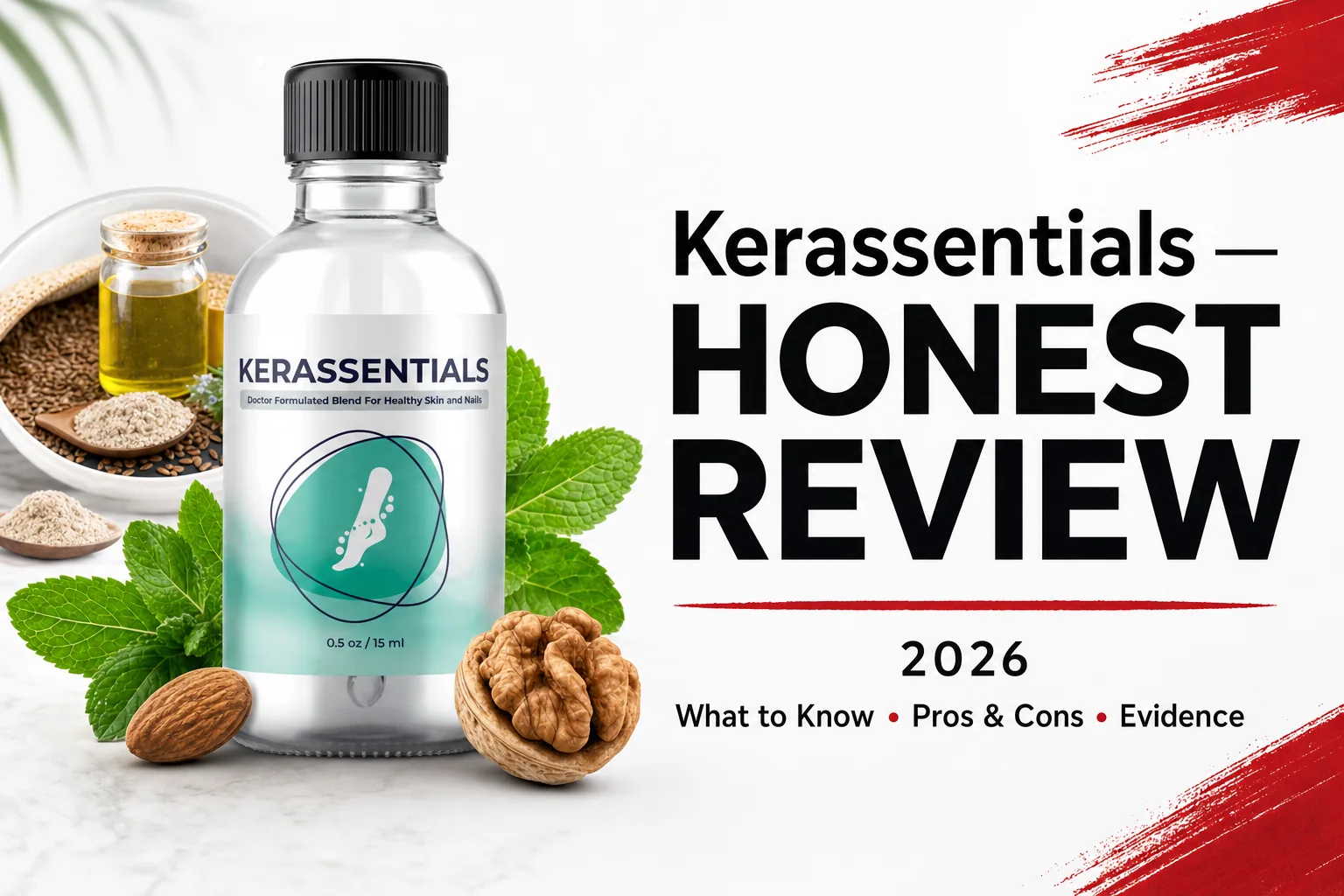
\nThe public product label images circulating on official seller pages and PDF captures show the bottle size as 0.5 fl oz (15 mL). The label lists a single active ingredient with a percentage and a long ingredient panel naming many oils and additives. Below is a practical transcription assembled from available label images. A useful Kerassentials ingredients review separates verifiable details from promotional language.
\n\nLabel transcription (as shown on product images)
\nProduct size: 0.5 fl oz / 15 mL Readers assessing Kerassentials ingredients should check the product details and the source behind each important claim.
\nActive ingredient (with dose): Undecylenic Acid USP (5%) Any conclusion about Kerassentials ingredients should reflect the available evidence, not just testimonials or advertising.
\nOther ingredients (listed on label images): mineral oil; sweet almond (Prunus amygdalus dulcis) oil; organic flaxseed (linum usitatissimum) oil; tea tree (Melaleuca alternifolia) oil; aloe vera leaf extract; canola oil; tocopheryl acetate (vitamin E); walnut oil; menthol; camphor; clove bud oil; jojoba oil; chia oil; lemongrass oil; lavender oil; manuka oil. Check the official listing for current details and refund conditions before buying Kerassentials ingredients.
\nNote: multiple label screenshots used across seller pages reproduce this same ingredient panel wording. Whether Kerassentials ingredients is suitable depends on individual needs, the product details, and the evidence available.
\n\nWhich ingredient is listed with a dose (Undecylenic Acid 5%)
\nOnly undecylenic acid is shown with a percentage on the publicly available labels: Undecylenic Acid USP (5%). Every other oil or extract is named but not quantified on those images. Treat claims about Kerassentials ingredients cautiously unless they can be confirmed by reliable, independent sources.
\nWhy that matters: dose information is essential when an ingredient is expected to provide the main pharmacologic effect. The label’s single % disclosure makes it possible to evaluate undecylenic acid against historical OTC formulations, but it leaves total concentrations of essential oils and carriers unknown. Compare Kerassentials ingredients with alternatives using transparent criteria rather than promises alone.
\n\nIngredient role: active versus carrier and additives
\nFrom the label wording and standard cosmetic/topical conventions you can reasonably group ingredients by likely role: When researching Kerassentials ingredients, separate independently verifiable information from claims made in advertisements.
\n- \n
- Primary active (antifungal): Undecylenic Acid USP 5% — listed as the active ingredient. \n
- Potential adjunct actives (essential oils with in‑vitro/limited clinical activity): Tea tree oil, clove bud oil, lemongrass oil, manuka oil, lavender oil — these have reported antifungal or antimicrobial properties in lab studies and some small clinical trials for topical use. \n
- Carriers / emollients: Mineral oil, sweet almond oil, flaxseed oil, canola oil, jojoba oil, chia oil, walnut oil — these keep the formula liquid, help spreadability, and soften skin/nail tissues. \n
- Soothing/antioxidant additives: Aloe vera leaf extract, tocopheryl acetate (vitamin E). \n
- Sensory agents: Menthol and camphor — for cooling/tingling sensation and fragrance. \n
Undecylenic acid: historical use, typical concentrations, and implications
\nUndecylenic acid is a known topical antifungal with a long history of over‑the‑counter use. It’s listed on the Kerassentials label at 5%. A balanced assessment of Kerassentials ingredients should include limitations as well as any potential advantages.
\nWhat the literature and regulatory histories show: undecylenic acid has been used in topical antifungal preparations for decades. Historically, effective topical concentrations in many OTC products and in monograph discussions have been higher (examples cited in regulatory records and reviews often indicate 10–25% ranges in topical products). A lower concentration may have less antifungal potency and less likelihood of penetrating a thickened nail plate. Readers considering Kerassentials ingredients can use these checks to make a more informed comparison.
\nPractical implication: having 5% undecylenic acid in an oil blend is not the same as the higher‑strength topical undecylenic formulations used historically for dermatophyte infections. Nail penetration is a separate technical challenge, so concentration and formulation both matter. In short, undecylenic acid is a legitimate antifungal active, but the 5% label strength and the oil vehicle are two variables that affect likely performance. Before relying on claims about Kerassentials ingredients, look for clear product details and trustworthy supporting evidence.
\n\nTea tree and other essential oils: in‑vitro and clinical evidence
\nTea tree oil (Melaleuca alternifolia) is the most studied essential oil for fungal skin and nail infections. Some randomized trials and systematic reviews have found topical tea tree oil may have modest benefit for nail fungus compared with placebo or low‑strength comparators, but results are variable and dependent on concentration and duration. A careful comparison of Kerassentials ingredients starts with the seller’s terms, the published details, and independent sources.
\nOther essential oils named on the label — lemongrass, lavender, clove, manuka — have laboratory (in‑vitro) evidence of antifungal activity. A few small clinical or pilot studies exist for individual essential oils, but high‑quality trials demonstrating that multi‑ingredient oil blends clear established, thick onychomycosis are lacking. When reviewing Kerassentials ingredients, look for specific information that a reader can independently verify.
\nImportant caveat: ingredient‑level evidence (e.g., studies on tea tree oil alone) does not prove the finished Kerassentials product works. I could not find any peer‑reviewed clinical trial testing the finished Kerassentials formulation as sold. The strongest assessment of Kerassentials ingredients explains both what is known and what remains uncertain.
\n\nCarrier oils, almond (tree‑nut) allergen risk and skin sensitizers
\nCarrier oils like sweet almond oil, jojoba, flaxseed, chia, and walnut are included to dilute essential oils and make the product spreadable. They’re not proven antifungal actives on their own but can help hydrate the skin and nail fold. Anyone comparing Kerassentials ingredients should confirm that the product page and seller policies are current.
\nAllergen flag: sweet almond oil is a tree‑nut derivative (Prunus amygdalus dulcis) and may trigger allergic reactions in people with tree‑nut allergy when applied to the skin. Several essential oils (lemongrass, clove, tea tree) are known skin sensitizers for a subset of users and can cause contact dermatitis or irritation, especially when used undiluted or in repeated applications. For Kerassentials ingredients, a transparent review should distinguish confirmed facts from opinions and promotional claims.
\nPractical advice: do a patch test on a small area of skin and wait 24–48 hours before regular application, especially if you have nut allergies, sensitive skin, or a history of eczema. Check whether the evidence cited for Kerassentials ingredients directly supports the claim being made.
\n\nTransparency gaps: missing amounts for essential oils and absent COA
\nTwo recurring transparency issues appear across official seller pages and independent reviews: A sensible buying decision about Kerassentials ingredients weighs the price, terms, alternatives, and available evidence.
\n- \n
- No quantitative breakdown for essential oils and carriers. The label images list many oils but don’t show their percentages or concentrations, so you can’t tell how much of the named essential oils is present per bottle. \n
- No published Certificate of Analysis (COA) available on official sales pages. A COA from a third‑party lab would show actual assay results (active content, purity, absence of contaminants). I could not find a COA on seller domains or in linked PDFs used for marketing. \n
Why this matters: essential oils vary widely in potency and purity. Without COAs and without ingredient concentrations beyond the single 5% listing, it’s harder to judge manufacturing consistency and the true strength of the active components. Look at the full context before accepting a headline claim about Kerassentials ingredients.
\n\nPractical takeaway: what Kerassentials ingredients mean for likely effectiveness
\nPutting facts together:
\n- \n
- Kerassentials lists an antifungal active (undecylenic acid) at 5% and several essential oils with laboratory or limited clinical evidence (tea tree being the best studied). \n
- The 5% undecylenic acid concentration is lower than some traditional topical undecylenic acid preparations; nail infections are technically hard to reach with topical products, so both concentration and formulation matter. \n
- There’s no published clinical trial of the finished Kerassentials blend, so ingredient‑level evidence does not equal proof the product will clear longstanding onychomycosis. \n
If you’re looking for plausible, lower‑risk topical support to use along with dermatologist advice, Kerassentials contains ingredients that have some theoretical or limited clinical basis. If you expect a guaranteed cure for established nail fungus, the available public evidence does not support that assurance. A fair review of Kerassentials ingredients should mention meaningful limitations as well as possible benefits.
\n\nComparison to OTC and prescription topical antifungals
\nHow Kerassentials stacks up compared with common alternatives: Before choosing Kerassentials ingredients, compare the details with at least one reliable independent source.
\n- \n
- OTC antifungals (common generics like clotrimazole or miconazole) are sold with established dosing instructions and a body of clinical experience for skin fungal infections; for nails, many topical options historically use higher concentrations of undecylenic acid or specially formulated lacquers designed to penetrate the nail plate. \n
- Prescription topical antifungals and oral antifungals have clinical trial evidence supporting their use in onychomycosis. Kerassentials lacks a published finished‑product trial to directly compare against those therapies. \n
- Cost and treatment time matter: nail fungus treatments often require months of consistent application; a single 15 mL bottle may not be enough for many users to treat a full course depending on application frequency. \n
Bottom line: Kerassentials lists plausible antifungal ingredients, but it’s not backed by finished‑product clinical trials and its undecylenic acid strength is lower than some historical topical formulations used for fungal infections. Readers can assess Kerassentials ingredients more carefully by checking current terms instead of relying on old summaries.
\n\nSafety, interactions, and who should consult a doctor
\nTopical products like Kerassentials generally have low systemic absorption, so systemic drug interactions are unlikely. Still, there are several practical safety notes: Any recommendation about Kerassentials ingredients should be based on the reader’s needs and verifiable information.
\n- \n
- Allergy risk: Contains sweet almond oil (tree‑nut). If you have a tree‑nut allergy, do not use the product without medical advice. Essential oils can also cause contact dermatitis. \n
- Irritation/sensitization: Menthol, camphor and several essential oils can sting or irritate sensitive skin. Stop use if you get worsening redness, blistering, or swelling. \n
- Open wounds / broken skin: Avoid applying to deep cuts or open sores. If skin is damaged, topical products can be more irritating and may increase absorption unpredictably. \n
- Diabetes and foot problems: If you have diabetes, peripheral neuropathy, or poor circulation to the feet, check with your primary care provider or podiatrist before using topical treatments on the feet or nails. \n
- Pregnancy and breastfeeding: Many essential oils are traditionally used with caution in pregnancy or breastfeeding. If you are pregnant or nursing, talk to your clinician before using concentrated essential oil blends. \n
- Combining topical treatments: Using multiple topical antifungals or medicated products at once can increase irritation. If you’re already using a prescription product, ask the prescriber before adding a new topical oil. \n
Patch test recommendation: apply a small drop to an inconspicuous area (inner forearm) and wait 24–48 hours to check for reactions before regular application. For a balanced view of Kerassentials ingredients, give more weight to clear evidence than to unverified testimonials.
\n\nLegit product vs fake sellers and refund policy
\nLegit vs fake sellers: The same product label and distributor address appear across many “official” seller pages, but there are many look‑alike domains and reseller pages in the marketplace. Independent reputation signals show customer complaints about refunds and delivery on the Better Business Bureau listing for the distributor address used on labels. Review the latest product information before making a decision about Kerassentials ingredients.
\nPractical buying tips:
\n- \n
- Buy from the seller domain you trust and verify checkout details. The product label commonly lists a distributor address (Aurora, CO) on publicly available label captures. \n
- Avoid third‑party marketplaces where counterfeits are more common and where seller identity is unclear. \n
- If you run into refund or delivery problems, the BBB profile documents consumer complaints you can consult for contact steps and escalation. \n
Refund policy: multiple seller pages advertise a 60‑day money‑back guarantee. That is a marketing claim reported across seller domains; read the checkout terms and refund procedure on the page you actually buy from before completing a purchase. Comparing Kerassentials ingredients against alternatives can reveal differences that promotional copy may not explain.
\n\nRead our guide on buying authentic Kerassentials and avoiding fakes
\n\n\n\n- \n
- Lists a known antifungal (undecylenic acid) as active. \n
- Contains tea tree oil, which has some clinical/lab evidence. \n
- Small, easy‑to‑apply bottle; many users prefer oil vehicles. \n
- Seller pages advertise a 60‑day money‑back guarantee. \n
- \n
- Only undecylenic acid has a disclosed % (5%); other ingredient amounts are absent. \n
- No published third‑party COA or finished‑product clinical trial found. \n
- Contains almond (tree‑nut) oil and multiple essential oils that can cause allergic reactions. \n
- Multiple look‑alike seller domains and BBB complaints raise authenticity/refund concerns for some buyers. \n
FAQ
\nWhat active ingredient is listed in Kerassentials?
\nHow much undecylenic acid is in Kerassentials and why it matters?
\nDo the essential oils in Kerassentials have clinical antifungal evidence?
\nAre there allergenic ingredients in Kerassentials?
\nIs there a published lab test or COA for Kerassentials ingredients?
\nHow do Kerassentials ingredients compare with OTC antifungals?
\nResearch notes
Sources consulted during preparation (listed without external hyperlinks): kkerassentials.com, supplementsdiary.com, bbb.org, feministfutures.socialsciences.ucsb.edu, pubmed.ncbi.nlm.nih.gov, supplementskeptic.com, kerussentials.com, doseaudit.com, keraassentials.com, trustpilot.com, reddit.com, fda.gov.